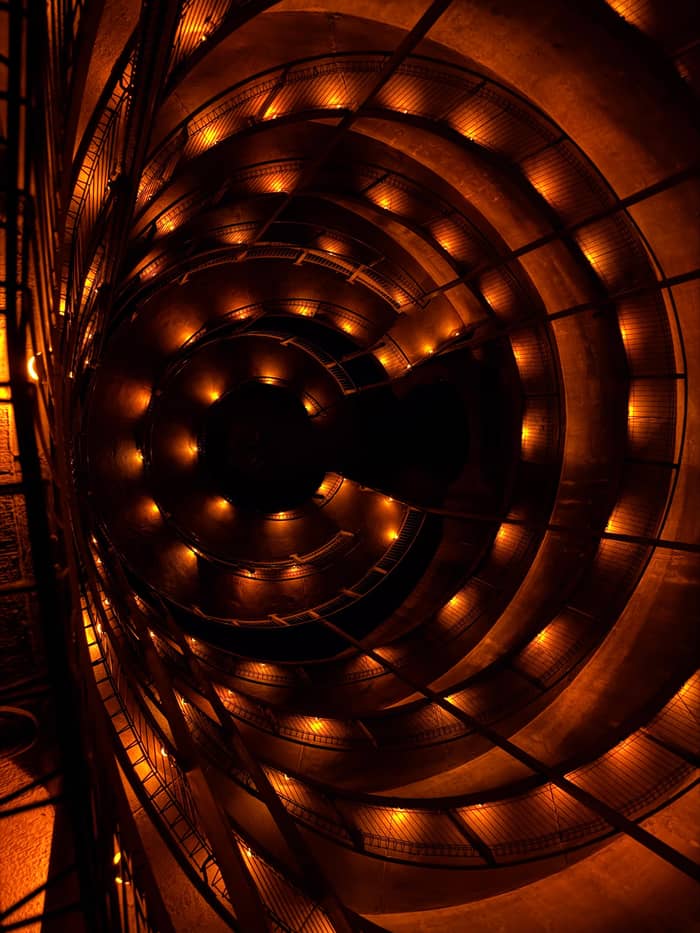
Silent ride
From the boat
The classic grotto
- Length1 hour
- PhotosNot allowed
- GuideEnglish
Pick-for-me guide
Two taps to your glowworms
Say how you want to meet them and who is coming, and a matching listing appears with its from-price.
The right fit for you
from $48
A walk through the chambers, then the silent boat under the grotto, about 1 hour.
The right fit for you
from $68
Walkways bring you close to the glowworms, photos are allowed in parts, and it is wheelchair accessible.
The right fit for you
from $129
A small group of up to 8 on natural terrain, 3.5 hours, meeting near Te Kuiti.
The lights on the ceiling of the Waitomo caves glow worms grottos belong to a hungry insect larva. Here is what it is, how it makes light, how it fishes, how long it lives and why the caves ask you to stay dark and quiet.
Editorial team, ruakuricave.quest · Updated November 8, 2026 · A 7 min read
The tiny lights in the Waitomo caves glow worms grottos are larvae. Science Learning Hub, the University of Waikato's science education site, explains that a glowworm is the larval stage of a fungus gnat, an insect that looks much like a mosquito.1 The cave operator makes the same point to visiting children: whatever the name says, it is not really a worm.7
The animal has two names worth knowing. In Maori it is titiwai, which the Hub translates as lights reflected in water, a fair description of the grotto seen from a boat.2 Its scientific name, Arachnocampa luminosa, means bright spider-worm, a nod to the silk it spins.3 Each larva is small: about 3 to 5 mm when it hatches and 30 mm by the time it pupates.8
Glowworms need still, dark and damp places with insects to eat, which is why they live in both caves and forests.9 Each larva builds a soft tube from mucus that works like a hammock and hangs from the roof or a bank.10 When you see thousands of points of light on a cave ceiling, you are looking at thousands of these hammocks, each one holding a single larva waiting for food.
Two glowworm caves
| Te Anau | Waitomo Glowworm Cave | |
|---|---|---|
| How you arrive | Catamaran across the lake | Drive or coach to the village |
| Cave age | About 12,000 years | Region under the sea 30 million years ago |
| Group | Up to 12 per guide | Up to 23 per boat |
| Temperature | 8 to 12 °C | 16 °C (operator FAQ) |
| Photos | Not allowed | Not allowed |
From each operator's own pages: RealNZ for Te Anau, Discover Waitomo for Waitomo.20,21,22,23,24,25,26,27,28
The glow comes from a light organ near the tail, and the Hub describes it as a byproduct of the animal's excretion.4 Chemically it is bioluminescence: an enzyme called luciferase reacts with other chemicals and releases light rather than heat.16 The result is the cool blue-green shine that photographs so badly and looks so striking to the naked eye.
The light is at its strongest during the larval stage, when the young insects are building traps and feeding.17 That is the only stage you will meet on a cave tour, which is why the ceilings stay lit year round. The light serves a purpose. It works as bait, and a brighter larva is a better hunter, so the glow you admire is the larva doing its job.
A popular story says glowworms switch off instantly when disturbed. The Hub calls that a myth: a larva can stop glowing, but it takes several minutes.18,19 If a light vanishes at once, the larva has probably pulled back into a crack in the rock. Still, guides ask for quiet and darkness, and you will see why further down the page.
Each larva hangs threads below its tube. It makes silk with its mouth and coats it with droplets of thick mucus so the lines turn sticky enough to hold small insects.33 In caves, where the air is still, a line can reach 500 mm.5 In the bush, where wind would tangle them, the lines stay far shorter, about 20 to 30 mm.34 Building one line takes the larva 1 to 15 minutes, depending on its length.35
The light and the lines work as one trap. A flying insect mistakes the glow for open sky, flies up toward it and ends up stuck on a thread.36 The larva then hauls the line in and eats. It is choosy too: it can cut away prey that is too large or not wanted.37 Seen up close, the Ruakuri Cave glowworms hang threads that look like strings of tiny glass beads.
These lines are the reason guides keep hands, hats and torches away from the ceiling. A brushed line is a lost meal and minutes of work to replace. On walkways where you pass close to the larvae, keep a little distance, follow the guide's lead and let the threads hang undisturbed.
Where to see them
Silent ride
The classic grotto
Photos allowed
Walkways beside the larvae
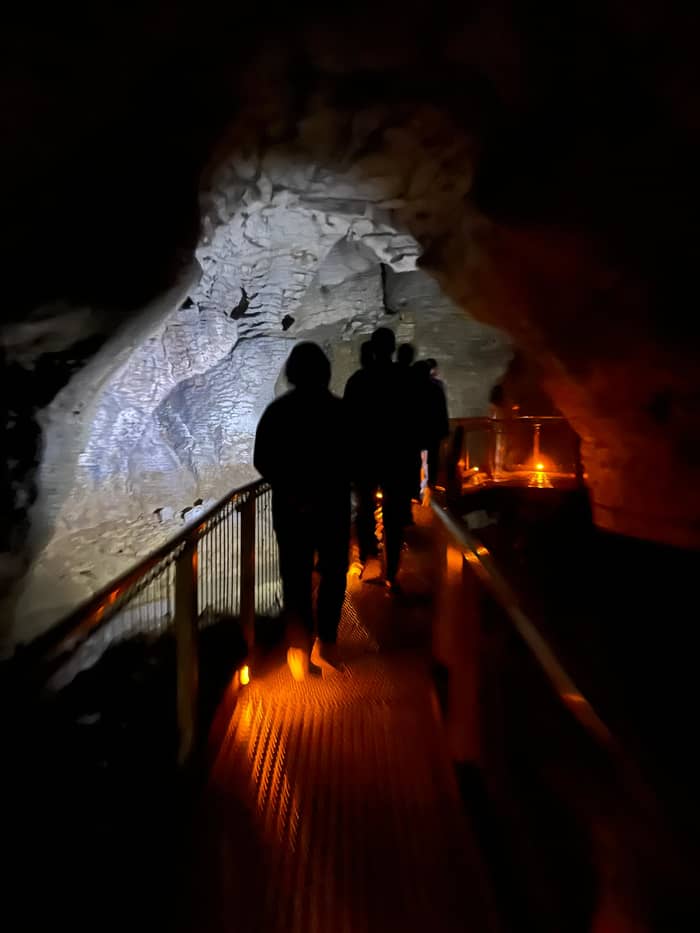
Adventure walk
Small group, off the main road
The life cycle is lopsided. Eggs take 10 to 20 days to hatch.11 The larva then lives for 300 to 350 days, feeding and glowing the whole time.6 It must eat enough in that stage to last the rest of its life, because pupae and adults do not eat.40
The pupal stage is brief, 10 to 15 days, while the larva rebuilds itself into a winged gnat inside a protective casing.12 The adult has no mouth and takes no food.14 It lives for only 2 to 5 days, long enough to find a mate.13 A female then lays clumps of 40 to 50 eggs, and the cycle starts again on the same ceiling.15
For a visitor that timing has a happy result. Because the long feeding stage dominates the year, there is no glowworm season to chase: the grottos are lit whenever you come. What changes with the seasons is the weather on the road and the crowds at the ticket desk, not the display on the ceiling.
Compare the costs
Set your group size to compare the boat, Ruakuri and a wild cave.
Compare 3 alternatives
Set your group size to compare the boat, Ruakuri and a wild cave.
≈
View≈
View≈
ViewStarting prices on GetYourGuide, exchanged at the ECB reference rate. The booking page gives the exact price.
Life cycle
On the Glowworm Cave boat you are asked to sit in silence, and the operator says simply that glowworms do not like noise.29 Cameras and GoPros cannot go into that cave at all.28 The operator adds that floating under the glowworms is more spectacular without flashes going off around you.41
At the Te Anau caves in Fiordland the operator gives a fuller reason for its own camera ban: flash light affects the glowworms and spoils the eyes of visitors adjusting to the dark.27 Whatever the cave, the practical lesson is the same. Your eyes need minutes in full darkness to see the faint lights, and one bright screen resets everybody's night vision on the boat.
Ruakuri is the exception for photographers: you may film and take pictures in parts of the cave the guide points out, though tripods and extension sticks stay behind on regular tours.31,39 Aranui, the third show cave, has no glowworms at all because there is no water in it, a neat proof of how much the insects depend on a damp cave.42
Video
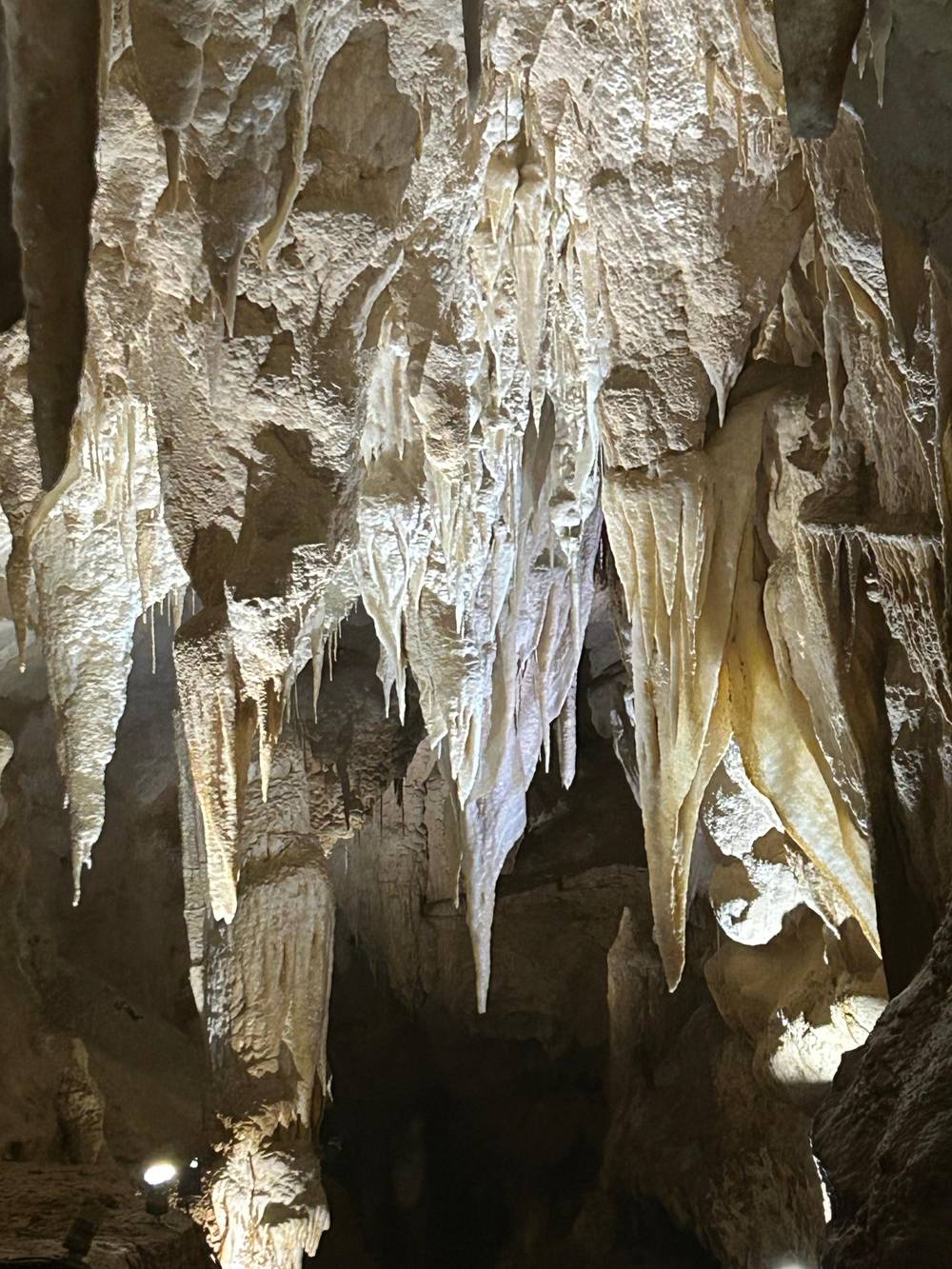
Bizarre Beasts on YouTube · The video waits until you tap play to load.
Photography and video cameras are not permitted in the Glowworm Caves because flash lights affect the glowworms and visitor acclimatisation to the dark
Glowworm manners
There are several ways to meet glowworms in Waitomo, and each shows them differently. The Glowworm Cave gives you the grotto from a boat after a walk through its tallest chamber, the Cathedral.43 Ruakuri lets you see glowworms right up close from its walkways.30 On a black water rafting trip the whole cave you float through is studded with them.44
You can also see them for free. On the Ruakuri Bush Walk near the caves, the track near the main bridge lights up with glowworms once night falls, and the operator advises carrying a torch.32 The village website says the same: walk beside the river at night and look for lights along the banks.38 Keep the torch pointed at the path, then switch it off and wait.
The most rewarding plan combines them: a guided cave by day for the history and the big display, and the bush walk after dinner to see glowworms in the wild. The forest larvae hang short lines, so their light looks finer and more scattered than the dense ceiling of a cave, and comparing the two is half the fun.
The question of Te Anau glowworm caves vs Waitomo comes up because both sell a silent boat under glowworms. Te Anau sits in Fiordland, and its trip begins with a catamaran cruise across Lake Te Anau to the far shore.20 Its operator says those caves are young, about 12,000 years old, and still being cut by the river.21 Waitomo's limestone is far older, laid down while the district was seabed 30 million years ago.22
The visits feel different. Te Anau runs groups of up to 12 guests per guide, needs significant bending at the entrance and shows off whirlpools and a loud underground waterfall.23,45,46 Its caves hold a fairly constant 8 to 12 degrees Celsius.25 At Waitomo a boat takes 23 people or fewer, and the operator's FAQ puts the Glowworm Cave at 16 °C.24,26
Pick by your route rather than by rank. If you are in Queenstown, Te Anau is around 2 hrs 45 mins away by car or coach and fits a Fiordland trip.47 If you are in Auckland, Rotorua or Hamilton, Waitomo is the natural choice and adds Ruakuri and the walks. Both ask for silence in the glowworm chamber.48,29
FAQ
They are the larvae of a fungus gnat, an insect that looks like a mosquito.1
Insects mistake the glow for open sky and fly into the sticky lines.36
It means lights reflected in water.2
The long larval stage keeps the cave ceilings lit all year.6
Search the banks by the main bridge at night, torch in hand.32
Sources
Related guides
Planning a visit to Ruakuri Cave? A real person answers here.